Ramstein Flag 26 strengthened Nordic Air Power as part of NATO
Finland, Sweden, Norway, and Denmark acted as joint hosts for the northern part of NATO’s Ramstein Flag 26 exercise, which concludes today.
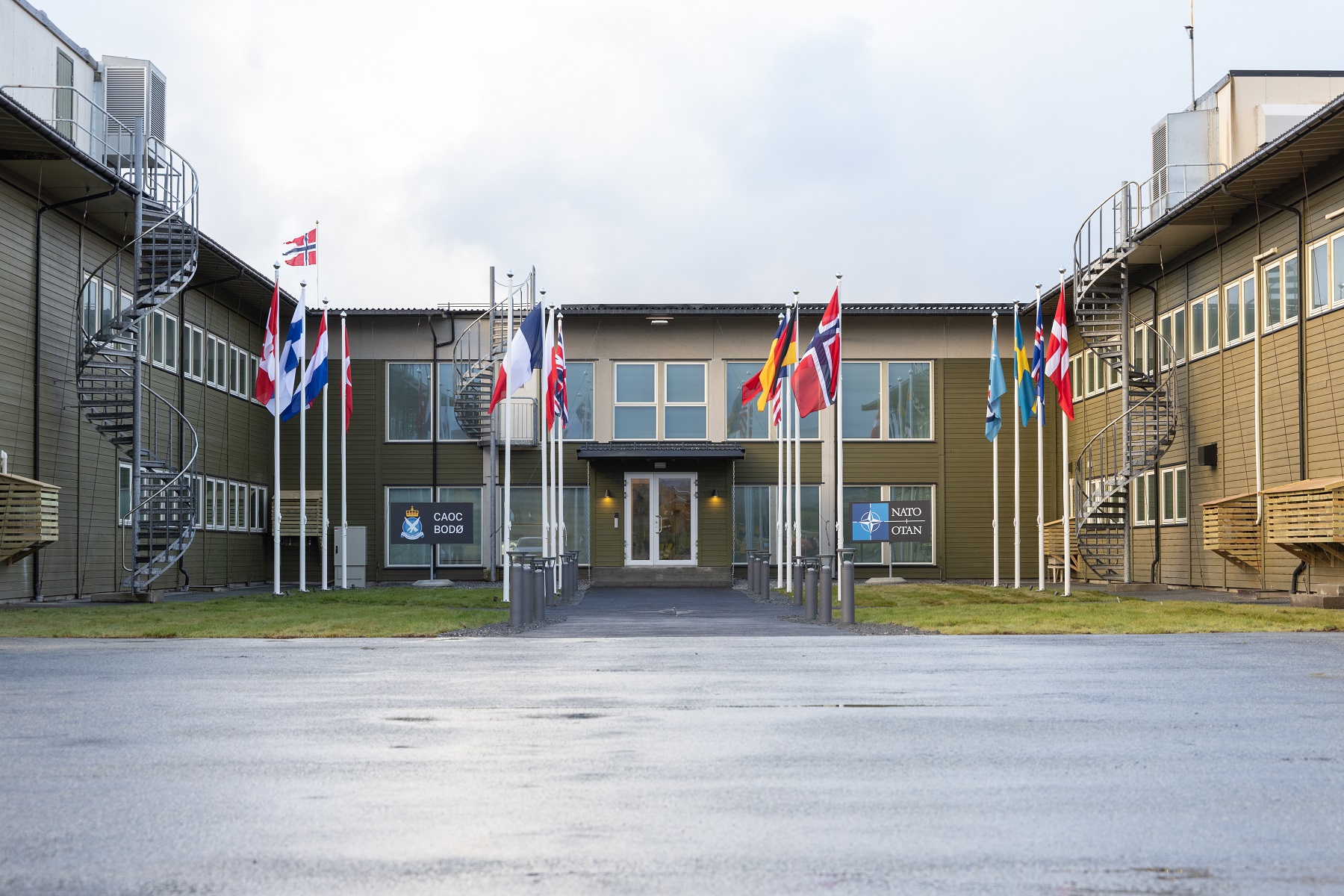
A total of 18 NATO nations and more than 200 aircraft participated in Ramstein Flag 26. This was the first time the Combined Air Operations Centre Bodø (CAOC Bodø), established in Bodø, Norway in autumn 2025, was involved in planning and directing an air exercise of this scale.
‒ During the exercise, CAOC Bodø had augmentee personnel from all the participating nations to ensure seamless air operations. The successful execution of such a large exercise demonstrates that we are on the right track in strengthening NATO and developing Nordic Air Power, says Colonel Vesa Mäntylä, Deputy Chief of Staff, Air Force Command Finland.
More than 100 aircraft simultaneously in the air
The exercise featured two daily waves of sorties. The smaller shadow waves were planned locally and primarily flown in training areas near the air bases in the morning. The large main waves were planned at CAOC Bodø and executed in a 700 x 700 km exercise area covering the airspace of northern Finland, Sweden, and Norway in the afternoon. This wide airspace enabled more than 100 aircraft to operate simultaneously during the main waves.
‒ In the main waves, we trained scenarios such as the suppression and destruction of enemy air defence systems, to enable freedom of action and safe continuation of air operations. A typical mission package included airborne early warning and control aircraft, aerial refueling tankers to enable extended operations, electronic warfare aircraft for surveillance and jamming, and multi-role fighters tasked with countering enemy aircraft and destroying air defence radars and missile units, Colonel Mäntylä says.
When adding coordination with ground-based targeteers, air defence units, and control and reporting centres, a single operation required the coordinated effort of several hundred personnel. All of this was planned and executed in multi-hour missions within the same operational area together with Allies.

4th and 5th generation fighter integration
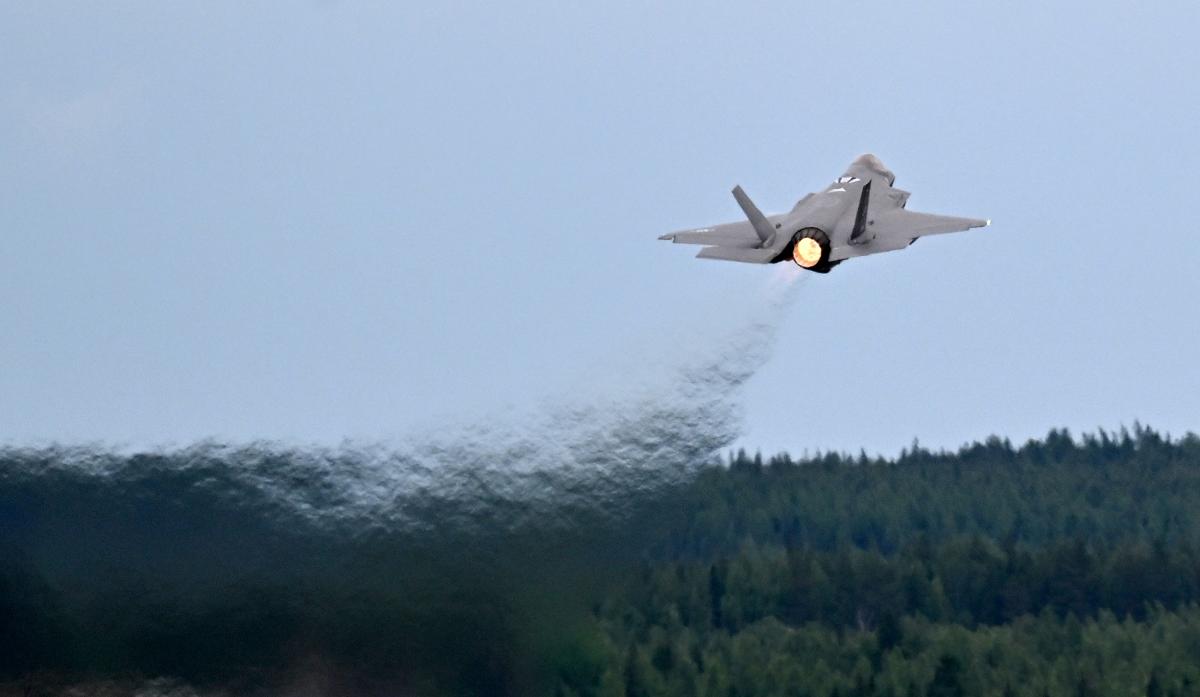
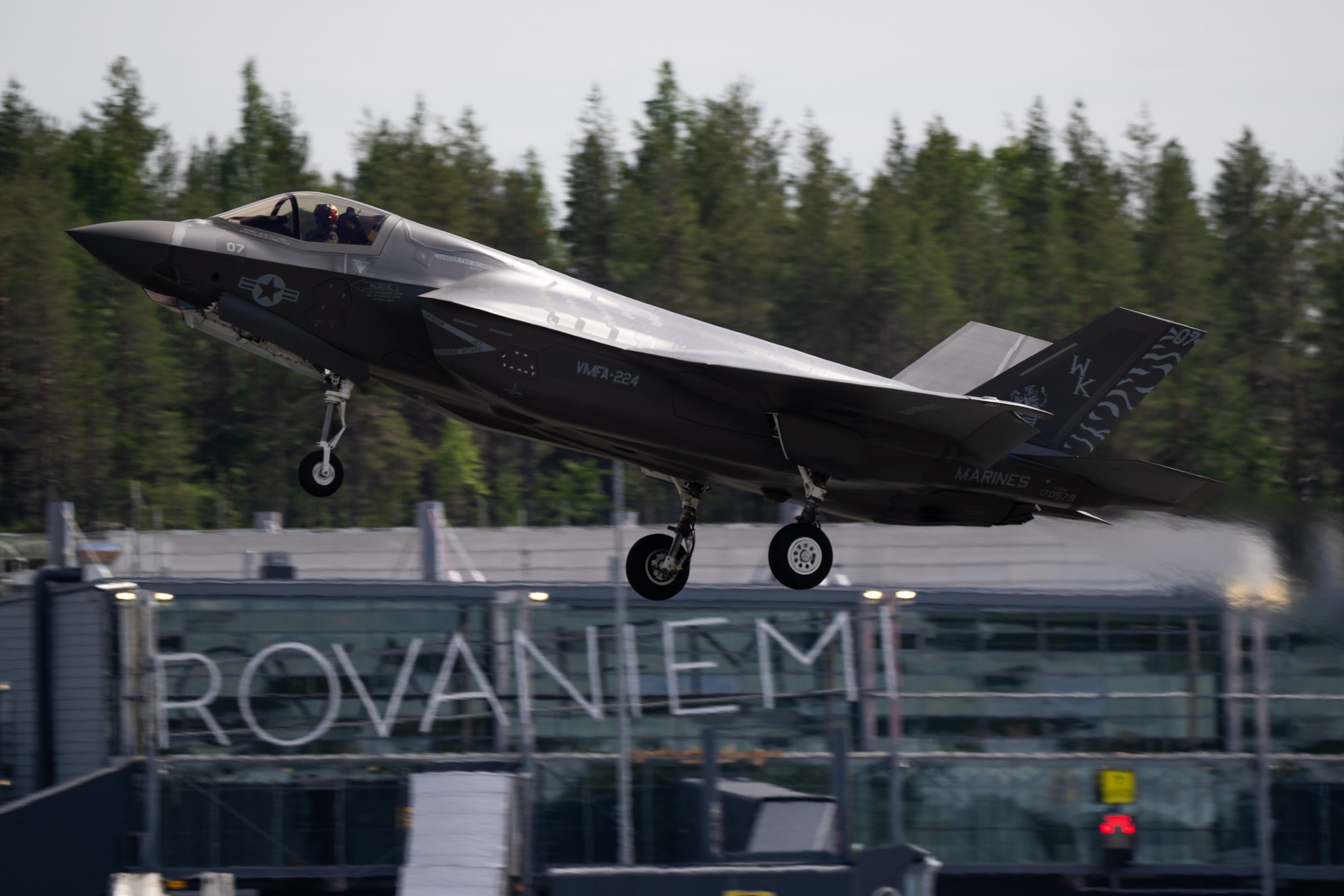
Ramstein Flag 26 involved F-35 fighter jets from several NATO nations. Finland hosted both U.S. Air Force F-35A and U.S. Marine Corps F-35B aircraft. The F-35As operated from Pirkkala Air Base, while the F-35B aircraft operated from Rovaniemi Air Base. Hosting the USMC F-35Bs, the Lapland Air Wing utilized for the first time the new facilities built for Finland’s first own F-35A fighter jets, which will arrive in Rovaniemi in autumn 2026.
The diverse range of participating fighter aircraft provided valuable opportunities to develop interoperability between 4th and 5th generation fighter platforms. From the Finnish Air Force perspective, this is particularly important during the upcoming transition period, when Finland will operate both the F/A-18 Hornet and the F-35A Lightning II simultaneously.
Interoperability between 4th and 5th generation fighters will remain essential for years to come, even as the number of 5th generation aircraft continues to grow in Europe. In Ramstein Flag 26, this cooperation was particularly evident in missions simulating the suppression and destruction of enemy air defences. Each aircraft type has its own role. Fifth-generation fighters enhance situational awareness for 4th generation aircraft with their advanced sensors and enable operations at lower risk levels through their stealth and electronic warfare capabilities.
Host nation support and introduction to dispersed operations for the Allies
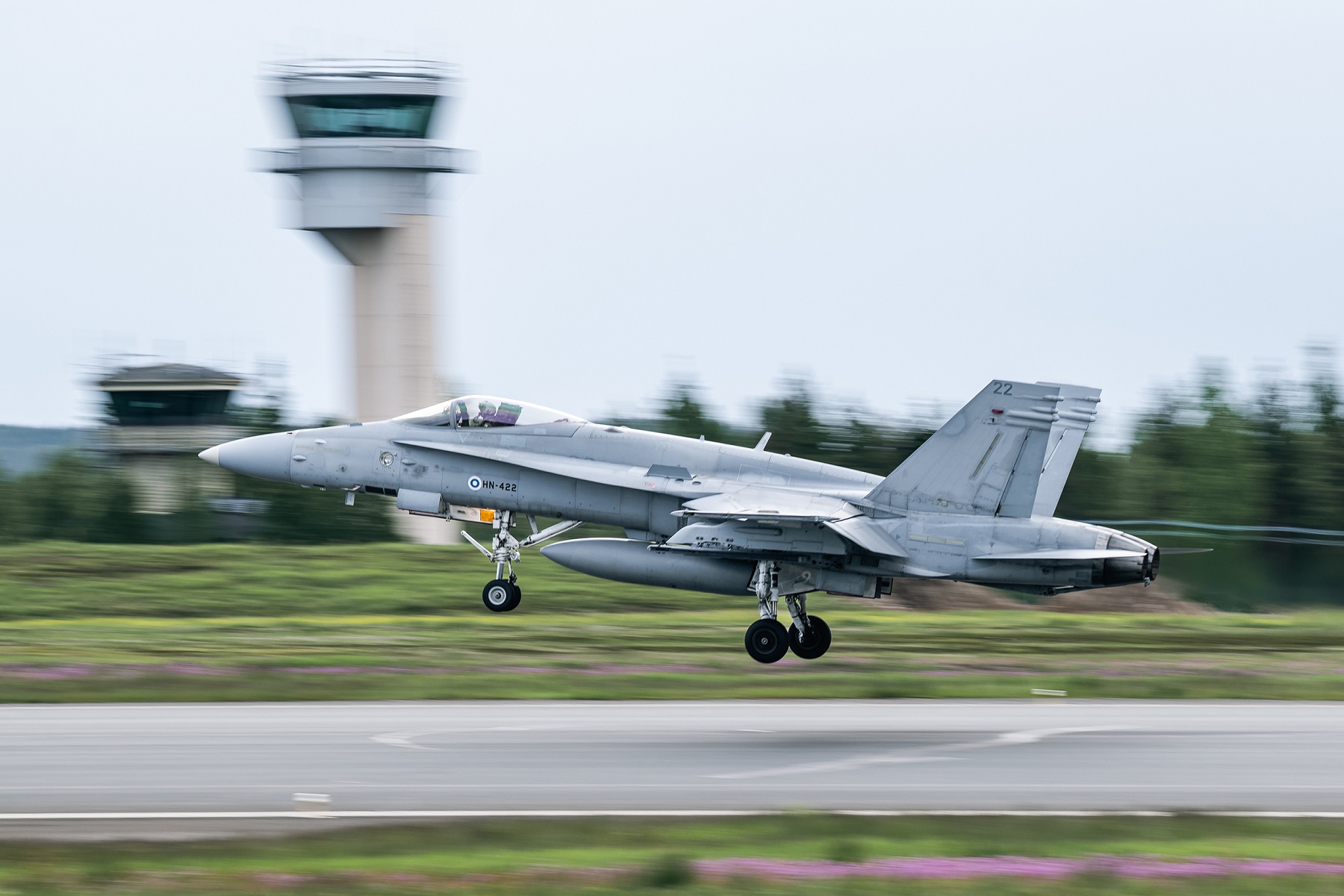
The Finnish Air Force took part in Ramstein Flag 26 with 12 F/A-18 Hornet fighter jets and around 500 personnel. Receiving Allied forces was a central element of the exercise, as more than 50 aircraft and 1,300 personnel from Allied nations deployed to Finland. Host nation support arrangements required extensive effort from all Finnish Air Force units. The Lapland Air Wing hosted German Air Force Tornado and Eurofighter jets as well as U.S. Marine Corps F-35B Lightning II fighter jets at Rovaniemi Air Base. Transport and aerial refuelling aircraft operating from Rovaniemi included the Multinational MRTT Unit's and the Spanish Air Force's A330 MRTT tankers, and the U.S. Marine Corps' KC-130J Super Hercules aircraft.
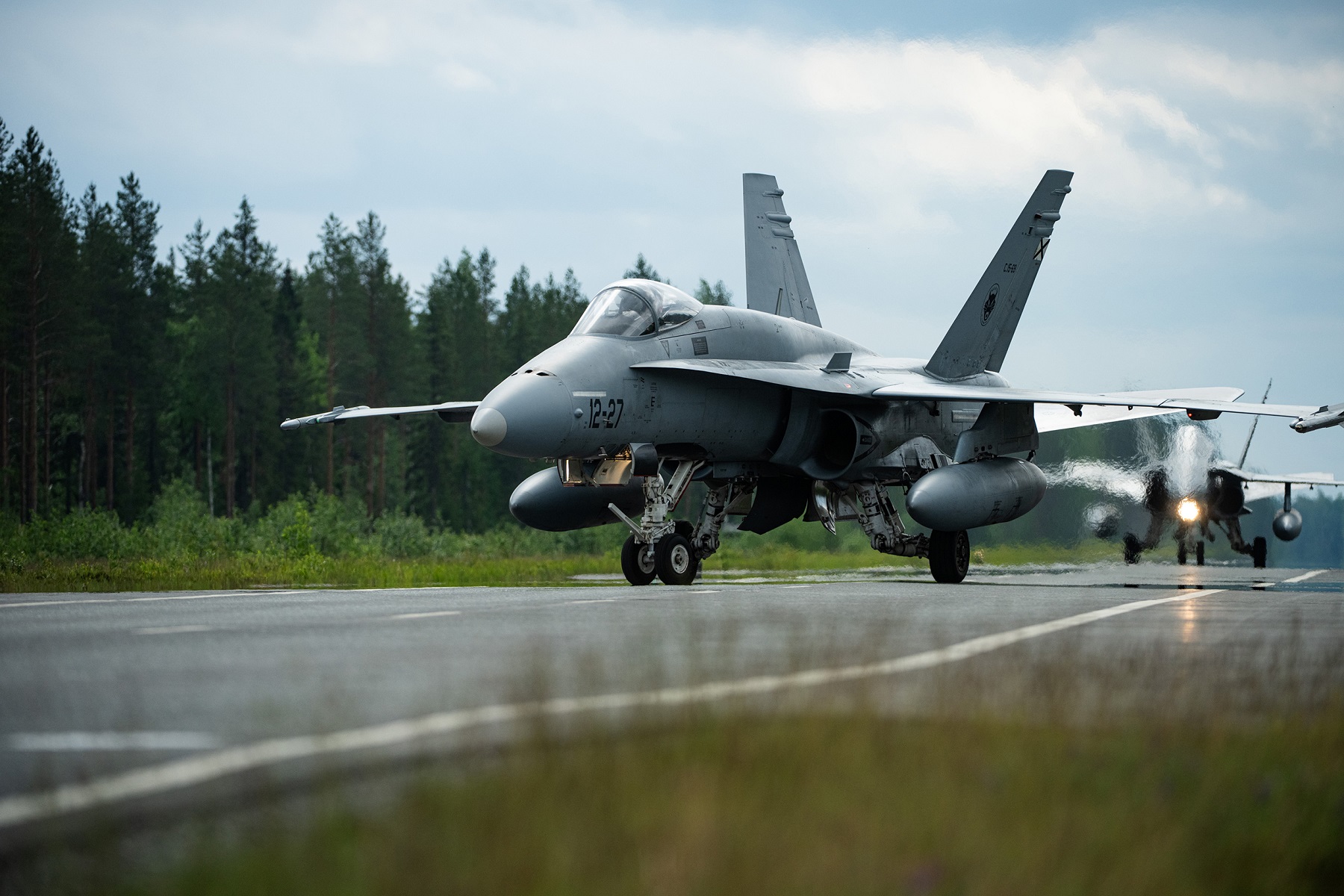
The Satakunta Air Wing hosted U.S. Air Force F-35A Lightning II fighter jets and NATO Intelligence, Surveillance and Reconnaissance Force (NISRF) RQ-4D Phoenix remotely piloted aircraft at Pirkkala Air Base. During the exercise, also British F-35B Lightning II jets, operating from the aircraft carrier HMS Prince of Wales, visited Pirkkala. Meanwhile, the Air Force Academy hosted Spanish Air Force EF-18 Hornets as well as Polish Air Force F-16 Fighting Falcon fighter jets and M-346 jet trainers at Tikkakoski Air Base. This was the first time Spanish and Polish fighter jets participated in a NATO exercise in Finland.

‒ Overall, host nation support and logistics were successful, although storage capacity and apron space at air bases are limited. This created some challenges but did not prevent the reception of Allied detachments. Executing an exercise of this scale is always a major effort. Host nation support arrangements worked well across all bases, for which I would like to thank our personnel, Colonel Mäntylä notes.
During the first week of the exercise, the Karelia Air Wing took into use the Tervo highway strip in Northern Savonia. This provided Allies an opportunity to learn about dispersed operations as part of the Finnish Air Force’s mobile and dispersed operating concept. This was the first time the U.S. Marine Corps, as well as the Polish and Spanish Air Forces, operated from a Finnish highway strip. Aircraft operating from Tervo included Finnish F/A-18 Hornets, U.S. Marine Corps F-35B Lightning II jets, Spanish EF-18 Hornets, and Polish F-16 Fighting Falcons and M-346 jet trainers.
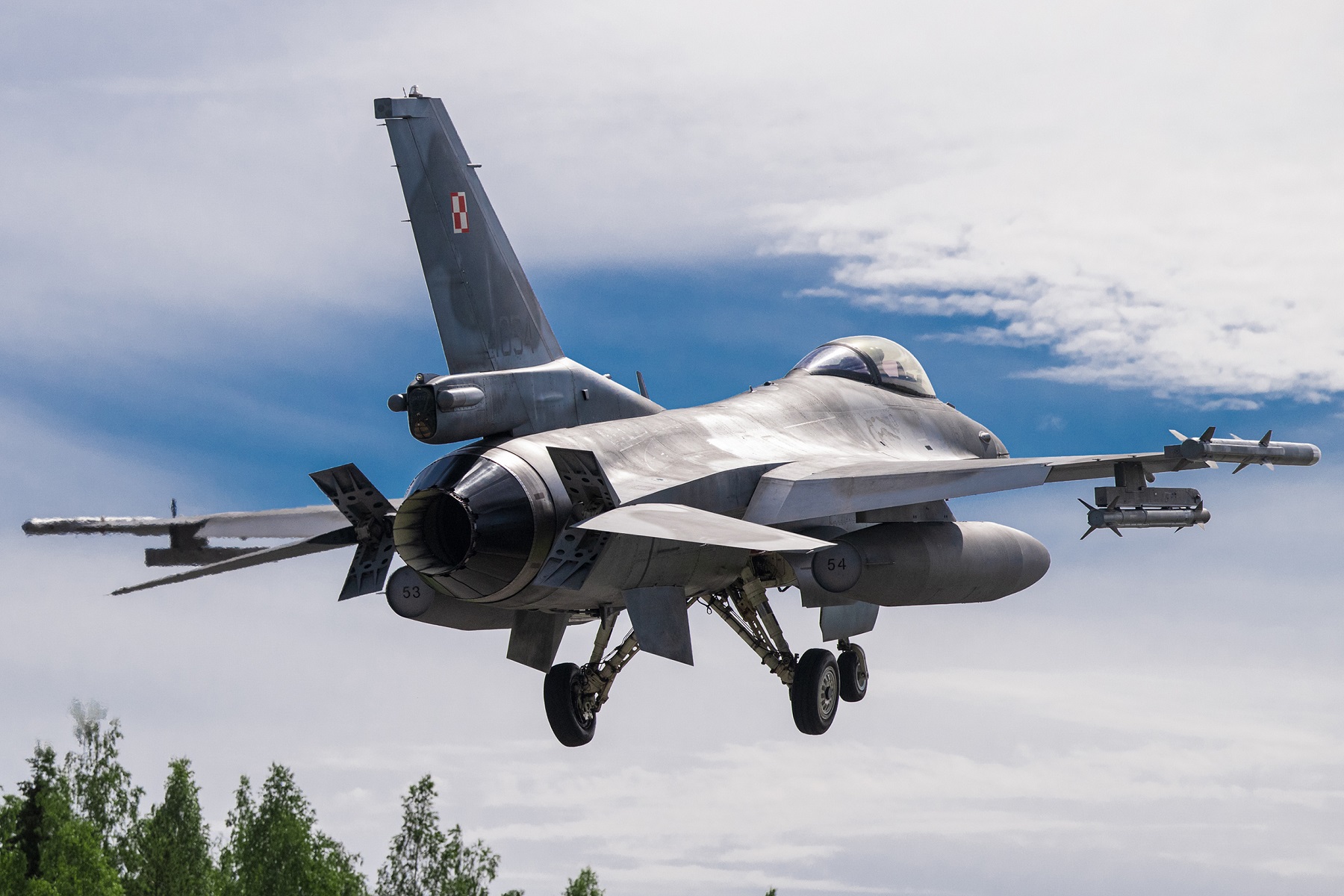
‒ Operations from Tervo were conducted during the first week of the exercise as part of smaller waves. The aim was to provide Allies with initial experience of operating from a road base environment, including hot-pit refueling and turnaround inspections in austere conditions. Finland’s mobile and dispersed operating concept is widely respected within NATO, and that appreciation continues to grow as Allies gain first-hand experience, Colonel Mäntylä says.
A step towards Nordic Air Power within NATO
The successful execution of the northern part of Ramstein Flag 26 further strengthened cooperation between the Nordic air forces as part of the Alliance.
‒ All in all, the exercise was a success, and all the planned missions were executed. CAOC Bodø participated for the first time in the planning and execution of such a large exercise, so there were also lessons identified, particularly in information management and the integration of operational planning systems. Overall, Ramstein Flag 26 was a significant step towards joint Nordic Air Power as part of NATO, Colonel Mäntylä concludes.